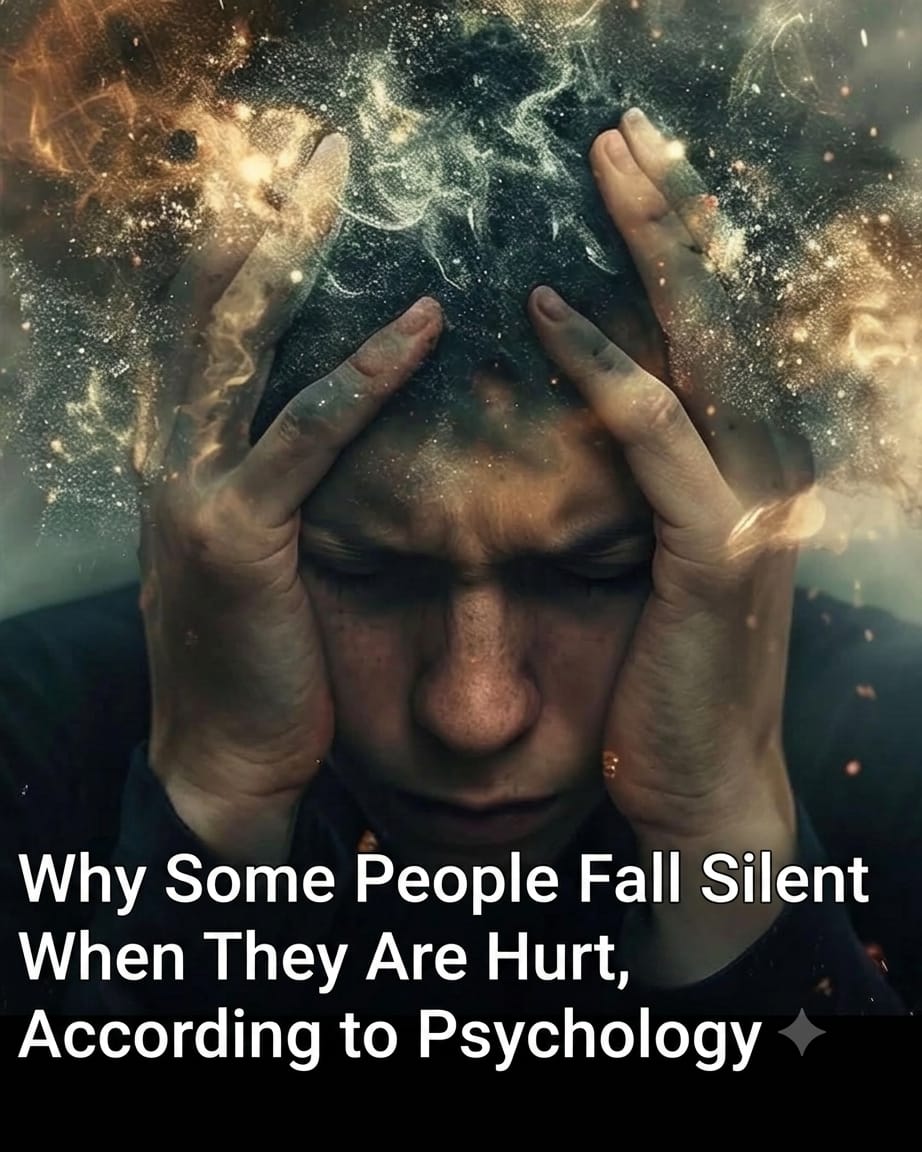
Emotional withdrawal… Why some people remain silent when they are suffering
Most people think that silence means only one thing: anger.
A person stops responding to messages. They distance themselves after an argument. Their replies become shorter, colder, or even disappear completely.
The immediate conclusion is usually the same: "He/She is deliberately ignoring me."
Sometimes, that's true.
But often, that's not the case.
What many interpret as rejection or punishment may in reality be something else entirely: a profound emotional upheaval.
The problem is that, from the outside, the two situations can appear almost identical.
Why is silence so difficult to live with?
Imagine sending a message to someone you care about and receiving no reply.
The hours pass. Then a day. Perhaps several days.
You see her active online. She responds to others, but not to you.
Almost immediately, your mind begins to fill in the gaps.
Uncertainty makes us uneasy, and when information is lacking, our brain naturally comes up with explanations.
Unfortunately, these explanations often lead to rejection.
"They're angry with me."
"I must have done something wrong."
"They don't care."
However, psychology suggests that silence is often less intentional than we believe.
For some people, withdrawal is not a strategy.
It's a reaction to stress.
And this distinction changes everything.
The difference between silence and emotional withdrawal.
The term "silence" is often used to describe any period of emotional distance.
But not all silences are created equal.
There is a significant difference between:
Refusing to communicate in order to control or punish someone
To withdraw because the emotions have become unbearable
One of them is manipulation.
The other is self-protection.
The problem is that most people have never learned to tell the difference.
Many of us grew up perceiving silence as a punishment.
Perhaps a parent stopped talking after an argument.
A partner withdrew their affection to send a message.
A friend suddenly became cold without explanation.
Over time, these experiences teach the brain to associate silence with abandonment.
In adulthood, our nervous system often reacts to withdrawal long before we consciously understand the cause.
Why does rejection hurt so much?
The pain of emotional withdrawal is not only emotional, it is also biological.
In a well-known study, neuroscientist Naomi Eisenberger discovered that social exclusion activates some of the same brain regions involved in physical pain.
In other words, being ignored is not only painful.
Your brain processes it in the same way as an injury.
This explains why emotional distance can trigger such intense reactions.
When a person distances themselves, the body often reacts as if facing a threat.
Fear, anxiety, and uncertainty are very real.
When silence is actually a response to stress
Relationship researcher John Gottman has devoted decades to studying conflict within couples.
His research has shown that during emotionally intense situations, some people are physiologically overwhelmed.
Their :