I remembered my mother sitting beside my bed each night, gently tucking the blankets around me and calling me her precious little girl.
How could she have whispered those words while carrying the weight of another daughter—a daughter she had kept hidden?
The memories I had treasured suddenly felt different.
They had been stained by the realization that my mother might not have been the person I thought she was.
Part of me wanted to be furious with her.
I wanted to demand answers.
But she was gone.
There was no way to ask why she had done it.
And despite the anger rising inside me, I couldn’t bring myself to hate her.
She was still my mother.
She was still the woman who had loved me, raised me and shaped the person I had become.
Could I condemn her forever for a decision she had made long before I was born?
I didn’t know.
Then I looked at the woman standing in front of me.
My sister.
I tried to imagine what her life must have been like.
She had grown up in the shadows, never openly acknowledged by the woman who had given birth to her.
How many times had she visited this grave alone?
How often had she stood here, overwhelmed by love, resentment and grief?
Perhaps she had spent her entire life feeling unwanted.
Perhaps she believed my mother had chosen me instead of her.
The thought made my anger begin to fade.
In its place came something unexpected.
Sympathy.
This woman had been hurt too.
Maybe even more deeply than I had.
As we stood beside our mother’s grave, I realized we were both victims of the same secret.
She wasn’t my enemy.
She was another daughter trying to understand why our mother had kept us apart.
I took a deep breath.
When I spoke again, my voice was much softer.
“I can’t imagine what your life has been like,” I said. “I didn’t know anything about you, and I’m truly sorry for that. But maybe… maybe we don’t have to continue hurting each other.”
Suspicion flickered in her eyes.
“What are you saying?”
“I’m saying that we’re both our mother’s daughters. We both have the right to stand here and grieve for her in our own way.”
She remained silent.
“Maybe we could try to get to know each other,” I continued. “It doesn’t have to be like this between us.”
Her expression tightened, as though she were afraid to believe me.
“Why would you want to do that?”
“Because I think it’s what our mother would have wanted,” I replied. “She wasn’t perfect. Clearly, she made mistakes. But I want to believe that she loved both of us. Maybe she was simply too frightened to bring us together.”
The woman’s expression softened slightly.
“You really believe that?”
I nodded.
“I do. And I think she would want us to find some kind of peace with each other.”
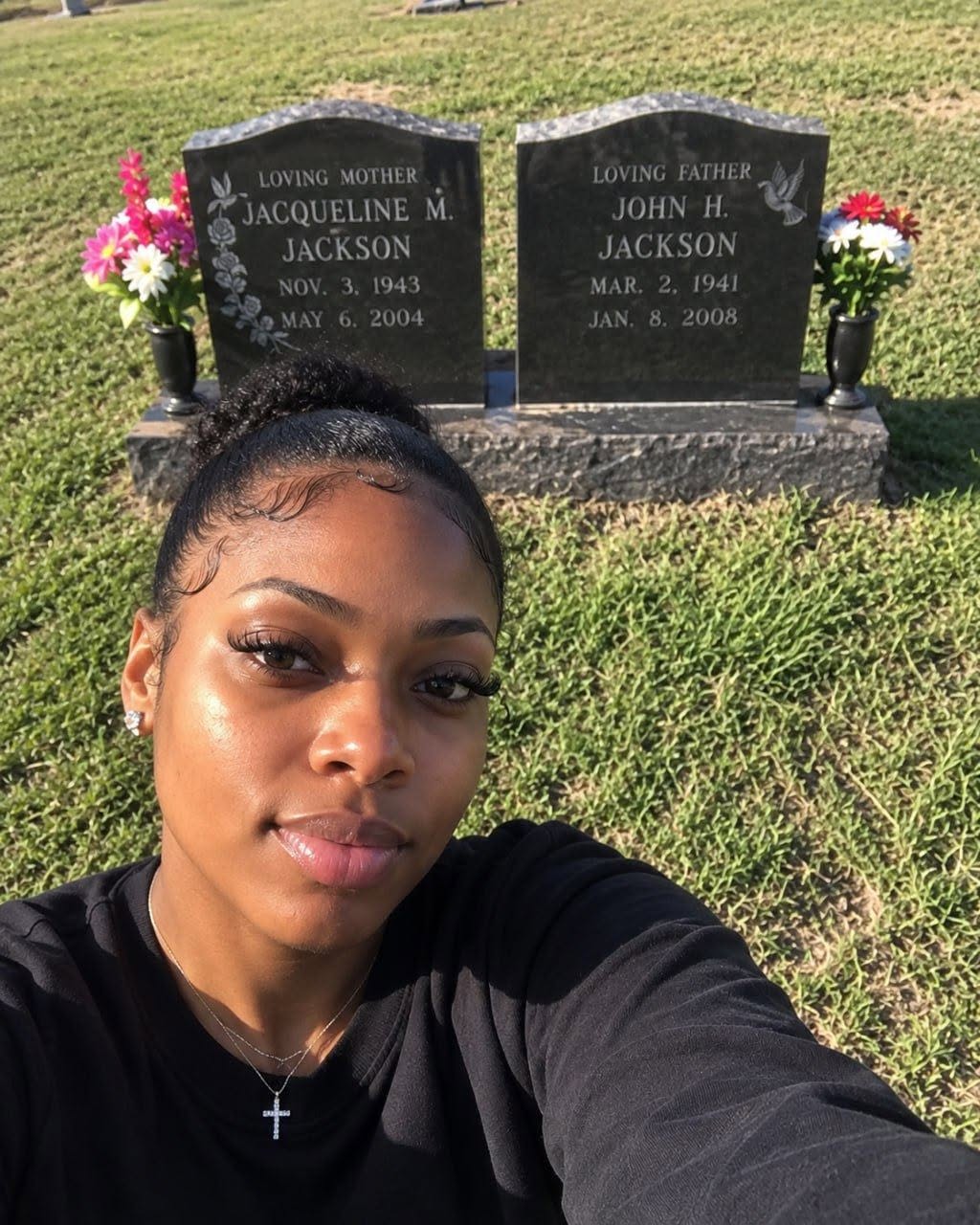
She turned toward the grave and gently traced the letters carved into our mother’s headstone.
“I never wanted to hate you,” she said quietly. “But I didn’t know what else to feel. It always seemed like she chose you over me—even after she died.”
“I understand,” I told her.
And I truly did.
“But it doesn’t have to remain that way. We can start over. We can at least try to be sisters.”
She looked back at me, and a tear slipped slowly down her cheek.
“I don’t know if I can simply forget everything that happened.”
“You don’t have to forget,” I assured her. “But maybe we can find a way to move forward together.”
For the first time, she smiled.
It was a small, uncertain smile, but it was genuine.
“I’d like that,” she said. “I think I’d like that very much.”
I suddenly realized that I didn’t even know her name.
“I never asked what your name was.”
“It’s Avery,” she replied softly.
We stood beside each other in silence for a while.
Two women who had arrived at the cemetery as complete strangers were now standing together as sisters.
The wind rustled through the leaves above us.
For the first time, the cemetery didn’t feel cold or lonely.
It felt peaceful.
A few days later, Avery and I met for coffee.
At first, the conversation was awkward.
Neither of us knew what to say or how to behave around the sister we had only just discovered.
But as we continued talking, the walls between us slowly began to crumble.
Avery told me about her childhood.
She described what it had been like growing up without truly knowing her mother.
She spoke about the questions she had carried for years and the anger that had followed her into adulthood.
In return, I shared stories about our mother.
I told her about the good memories, the difficult moments and the little habits that had made our mother who she was.
We laughed.
We cried.
And slowly, carefully, a bond began forming between us.
After that, we started visiting our mother’s grave together.
We each brought flowers, but no longer as competitors fighting for a place beside the same headstone.
The flowers became a shared gesture of love and remembrance.
We weren’t trying to erase the painful past.
Instead, we were building something new from it.
Something that honored our mother’s memory in a way neither of us could have accomplished alone.
As time passed, I realized that meeting Avery had changed me.
Not only because I had discovered the truth about my mother, but because the experience taught me something about forgiveness and second chances.
My mother’s secret had caused enormous pain.
But it had also brought me a sister I never knew I needed.
One quiet afternoon, Avery and I stood together beside our mother’s grave.
As I looked at her, I felt a sense of peace I hadn’t experienced in a long time.
My mother had been right about one thing.
The living were the ones who needed attention.
And now, Avery and I were learning how to care for each other, slowly healing the wounds that had kept us apart before we had even met.
“I think she would be proud of us,” I said quietly.
Avery nodded, resting her hand gently against the headstone.
“Yeah,” she whispered. “I think so too.”
And in that moment, I knew the road ahead of us would not always be easy.
There were still unanswered questions, painful memories and years of resentment we would have to work through.
But for the first time, neither of us would have to face them alone.
We were finally walking that road together.
THE END.