PART 1
After five years of bathing him, lifting him, and being his full-time nurse, I overheard a conversation between my paralyzed husband and another man. He was laughing and saying, "She's a free-spirited housekeeper. A useful idiot." At that moment, the obedient wife vanished, replaced by something colder, quieter, and far more dangerous.
Five years doesn't seem long until you live through it. Five years is sixty months, one thousand eight hundred and twenty-five days of slowly fading away. I spent my entire twenties without celebrating significant events, without building a future, without traveling, but learning to become invisible.
Five years of getting up before dawn to boil soup, crush pills, and memorize the precise way to turn a motionless body so its skin wouldn't tear. Five years of therapy sessions, sleepless nights, pills, and forced smiles for a man who could look through walls and never see me. Back then, when I was still naive enough to call it love, I believed that sacrifice was a form of devotion. That pain was the price to pay for permanence. "In sickness as in health," I repeated to myself like a mantra every time my back gave out or the smell of antiseptic lingered so long that I forgot what the scent was.
Lucas's accident happened on a country road near Golden. A drunk driver. Twisted metal. A life cut in two. He survived. His legs didn't. And I, Marianne Cortez, stayed. I turned our house into a medical unit. I learned how to use wheelchairs, catheters, and emergency protocols. I learned to stay calm while he screamed, curled up, or remained silent for days.
Then came that Tuesday. The day that turned everything I thought I knew upside down.
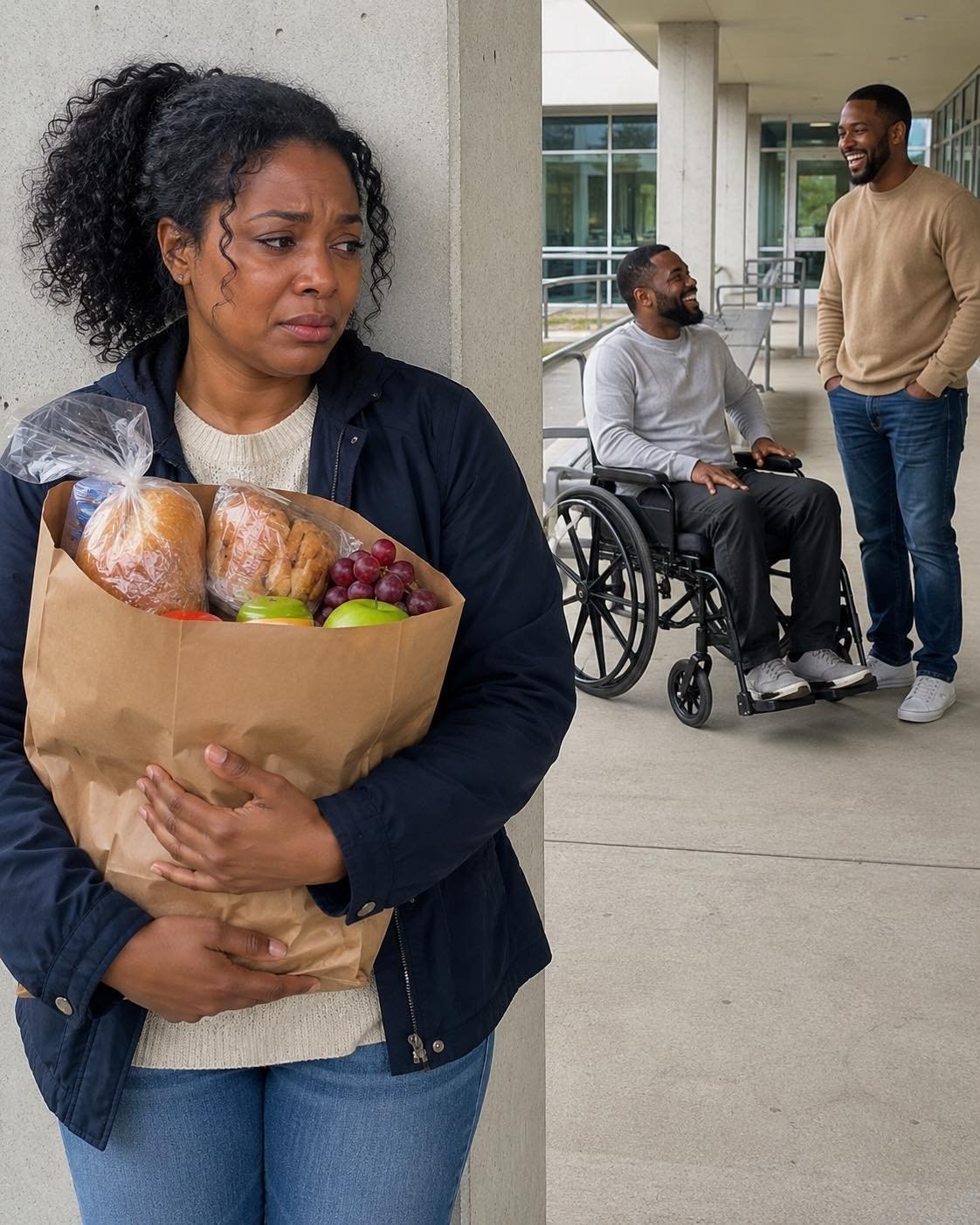
I was carrying a brown paper bag filled with warm sweet bread, his favorite. Soft. Fresh. I'd gotten up before dawn to stop at the bakery before heading to the Front Range Medical Pavilion, wanting to bring him something comforting. I walked through the rehabilitation ward, hope, however naive, still present, when I heard his voice.
He was on the outdoor terrace where the patients were sunbathing. I stopped behind a concrete pillar, not to spy on him, but to smooth my hair. I wanted to look presentable for my husband.
"Basically, it's unpaid work," Lucas said, laughing. His voice was loud, sharp, and amused. "I don't pay her, she never complains, and she's young enough to carry me around all day."
Another man laughed.
“I sorted that out early on,” Lucas continued, each word wounding me deeply. “She feeds me, cleans the house, fights with the insurance, bathes me. She’s not a wife. She’s a complete, free service. When I’m gone, my son and sister will have everything. They depend on me. She’s just… there.”
My legs went numb. I pressed myself against the cold concrete, clutching the bag of bread like debris at the bottom of a pool. A few minutes earlier, it had been a symbol of love. Now, it was a symbol of shame. "Free." "Useful." "Obedient."
That's how my husband described me.
I didn't cry. The tears never came. An icy chill washed over me. I thought of his twenty-two-year-old son, who treated our house like a hotel, never saying hello, never lifting a finger. "He's traumatized," Lucas always said. And I carried on with the dishes.
Lucas laughed again. That laugh finished me off.
I walked away silently. I didn't confront him. I didn't break down. I left.
That evening, when the ambulance brought him home, he was already in bed.
"Where were you?" he snapped. "Did you bring the bread?"
I looked at him, really looked at him, and I saw not a broken man, but a rigid man in a wheelchair.
"I forgot," I said.
While adjusting my pillows, I made myself a promise.
I wouldn't shout. I wouldn't argue. I would disappear. But first, I would show her how expensive a "free cleaning lady" really is..
PART 2

I smiled the day my husband divorced me and married the woman he had cheated on me with. I was eight months pregnant. Many

Mix this with Vaseline to look younger.

The day before my wedding, I heard my bridesmaids through the hotel room wall.

My mother-in-law shaved my head while I slept on the very night the United States Army promoted me into one of the most important commands of my career. soe
A natural remedy: Use guava leaves to treat eye problems, improve vision, and relieve pain and eye strain—especially as you age or after a long